Safeguard your workforce on site by ensuring a thorough Scaffolding Safety Inspection
Unsafe scaffolding accounts for up to 39–45% of global workplace incidents. These numbers show that scaffolding safety inspections can be completely overlooked at the construction site as was observed by the CQRA Safety Inspection expert on an industrial project in a tier 2 Indian city.

THE CASE : MISSING SUPPORTS & WRONG SAFETY TAGS
CQRA experts found a 12 meter high scaffold erected without requisite supports that ensure the stability of the structure. The scaffold did not have a proper access either, compromising the safety of workers using the scaffold. What’s worse, the onsite team had put up a Green tag on the precarious scaffold, which was a wrong indication of its safety level. The improper tag misled the workers into thinking that the scaffold was safe for use.
The CQRA team averted a safety related mishap by tagging the scaffold correctly with a yellow tag, stopping all activity on and around it. The scaffold was declared safe for use after the access and adequate supports were provided, all due to the timely intervention of an expert third party safety auditor, CQRA.
What is Scaffold Safety Inspection?
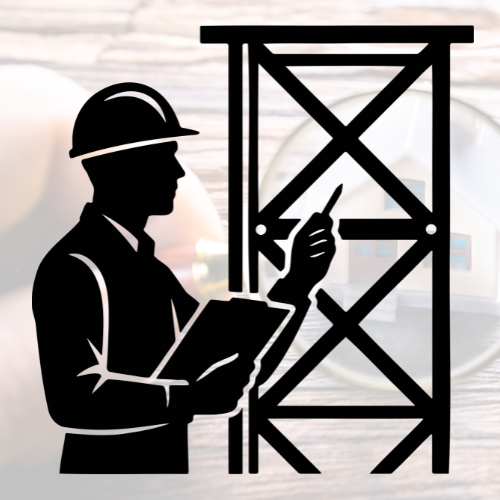
A Scaffold Safety Inspection would involves a thorough examination of the scaffold construction and materials, stability, ability to bear the required live and dead loads and compliance with
IS 3936 codes. Based on a satisfactory safety score, the scaffold is assigned the appropriate tag by the safety inspector, indicating its level of safety.

Why Is A Third Party Safety Inspector Needed On Site?
Safety Inspectors preempt mishaps and mitigate risks to life and limb at the construction site. They work to identify unsafe working conditions. As a full time monitoring service, safety inspectors observe the site on a continuous basis and even educate employees on potential risk identification and quick response to accidents.
ELEMENTS OF SAFE SCAFFOLDING AT THE CONSTRUCTION SITE
Scaffolding Standards
There are specific standard for scaffolding that need to be followed for a failsafe framework. For example, IS 2750 pertains to metal scaffolding and IS 3696 part 1 for bamboo or tubular type scaffolds.
Load Calculations and Distribution
The safe working load of the scaffold is calculated by considering both the live and dead loads. Light, medium or heavy duty scaffolds are used depending on the project requirement. Mobile scaffolds are used for temporary works.
Materials and Assembly
Only competent scaffolding contractors must be hired for providing and assembling the scaffold structure. Scaffold materials like ledgers, transoms, toe boards, decks, braces, couplers etc must be in good condition. Gaps are a safety hazard and can lead to accidents due to falling materials and tools.
Access
Proper access to the scaffold is necessary. Ladders must be provided so that workers can reach the working platform at the top of the scaffold.
Work Permits and Tags
Ensuring requisite height permits before constructing the scaffold is a legal requirement that must be carried out before starting any high risk or critical activity. Correct tagging of the scaffold in accordance with its safety level is a mandatory requirement – Green tags for safe and ready- to- use scaffolds, Yellow for under construction and Red for unsafe scaffolds.
CQRA is India’s leading third-party quality and safety inspection agency, ensuring every construction site meets the highest safety standards. Our expert auditors identify risks before they turn into incidents, helping developers build with confidence. We deliver safety audits, compliance checks, and workforce training for safer sites.
Make safety a priority—contact CQRA today for detailed Safety Inspection information.
🌐Website: www.cqra.com
📧 Email: marketing@cqra.acts-int.com
📞Contact: +91 9112232323