
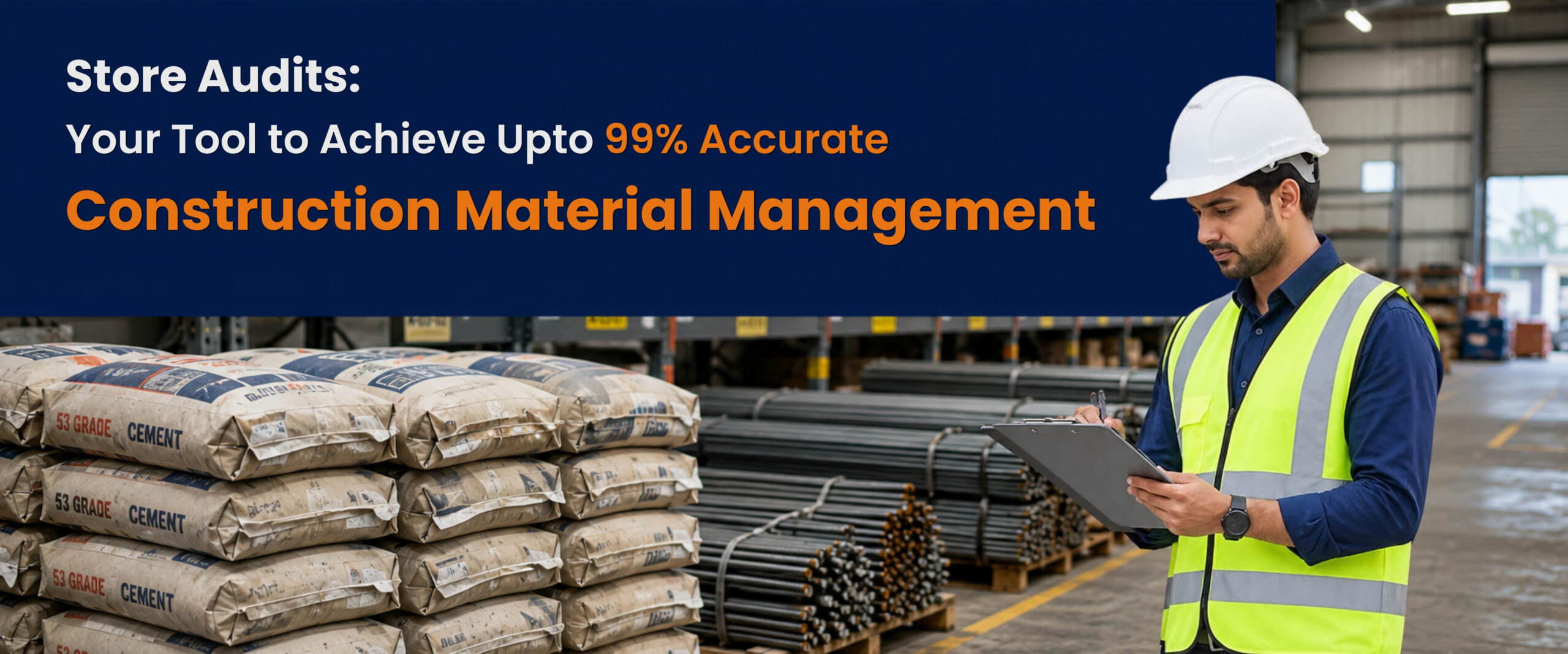
Inefficient inventory management can erode construction project margins by causing material wastage of up to 20-30%. Store or Inventory Audits are a powerful tool that helps your project operate smoothly like a well-oiled machine. With large number of components, materials that keep entering and circulating on the construction site, the Store Audits ensure their proper tracking, storage and application. Helping control your business resources, Store Audits curtail losses and thefts and reinforce best practices, improve timelines and protect profitability.
Why Store Audits Matter
Construction companies tend to keep Inventory or Store Audits on the back burner, not prioritizing material movement on the site. This leads to serious lapses in inventory management like our experts observed in a residential project in Pune. Despite applying an ERP system for inventory, improper data entries and lack of oversight lead to a certain material being utilized on one building with a procurement order issued for another building. Such discrepancies then can lead to major errors in the Billing process thereby affecting the financial health of the project.
Inventory accuracy is critical when it comes to safeguarding your material assets and preventing losses. Regular checks that are part of the audit process can help construction companies reach almost 99% accuracy rates. Store audits also enforce storage and handling compliance of hazardous chemicals and inflammable materials thereby mitigating safety violations and regulatory risks.
CQRA’s Store Audits – Steps for 99% Accuracy

Physical Inventory Verification: Conducting physical stock counts and comparing with book records to ensure accuracy and identify any discrepancies. This includes checking the material specifications on purchase orders like brand, quantities, and delivery terms and cross verifying with inward registers, invoices and noting damages
Pilferage Prevention Measures: Assessing inventory security measures and recommending strategies to minimize the risk of theft and loss. Checks ensure correct inward and outward material movement, and documentation. Reviewing material issuance records against actual usage is an important aspect.
Storage and Handling Assessment: Evaluating the storage and handling of materials to ensure that they are segregated and stored correctly to prevent misplacement and deterioration. Implementing FIFO (first in, first out) and FEFO (first expired, first out), when handling materials like waterproofing chemicals and paints. Recommending disposal or repurposing strategies is part of the audit.
Inventory Management System Review: Examining inventory processes to identify areas for improvement and enhance efficiency.
Material Tracking and Reconciliation: Verifying material tracking and performing reconciliation, especially when labor services are provided by external contractors and material has been purchased by the client. For example – reinforcement checks to ensure accurate stock records.
Process Adherence & Documentation Audit: Reviewing SOP adherence for material storage and handling. This also includes checking documentation flow, approvals, and record-keeping efficiency
Benefits of Store Audits

- Enhanced Operational Efficiency – with reduced downtime, better resource allocation
- Improved Vendor Relations – enabling stronger negotiations, better delivery time.
- Ensure almost 10-15% reductions in inventory shrinkage/ errors, losses due to thefts.
- Lower material safety issues – leads to saving on insurance premiums
- Data driven decision making – results in improved logistics planning and project timelines.
Manual tracking leaves a wide margin for error that skews your project profitability. CQRA’s robust Store/ Inventory Audit is your tool for accurate construction material management that eliminates ambiguity with real-time data.
Make the most of this overlooked process before you begin your next project. Book an appointment with our Store Audit experts to plan your customized audit schedule.
Contact CQRA to know how we can collaborate.
Website: www.cqra.com
Email: marketing@cqra.acts-int.com
Contact: +91 9112232323